Beyond the Diploma: Building Career Capital in a Changing World
Scholarships & Economic Empowerment SeriesThe Day After Graduation
For many students, graduation is supposed to feel like the finish line.
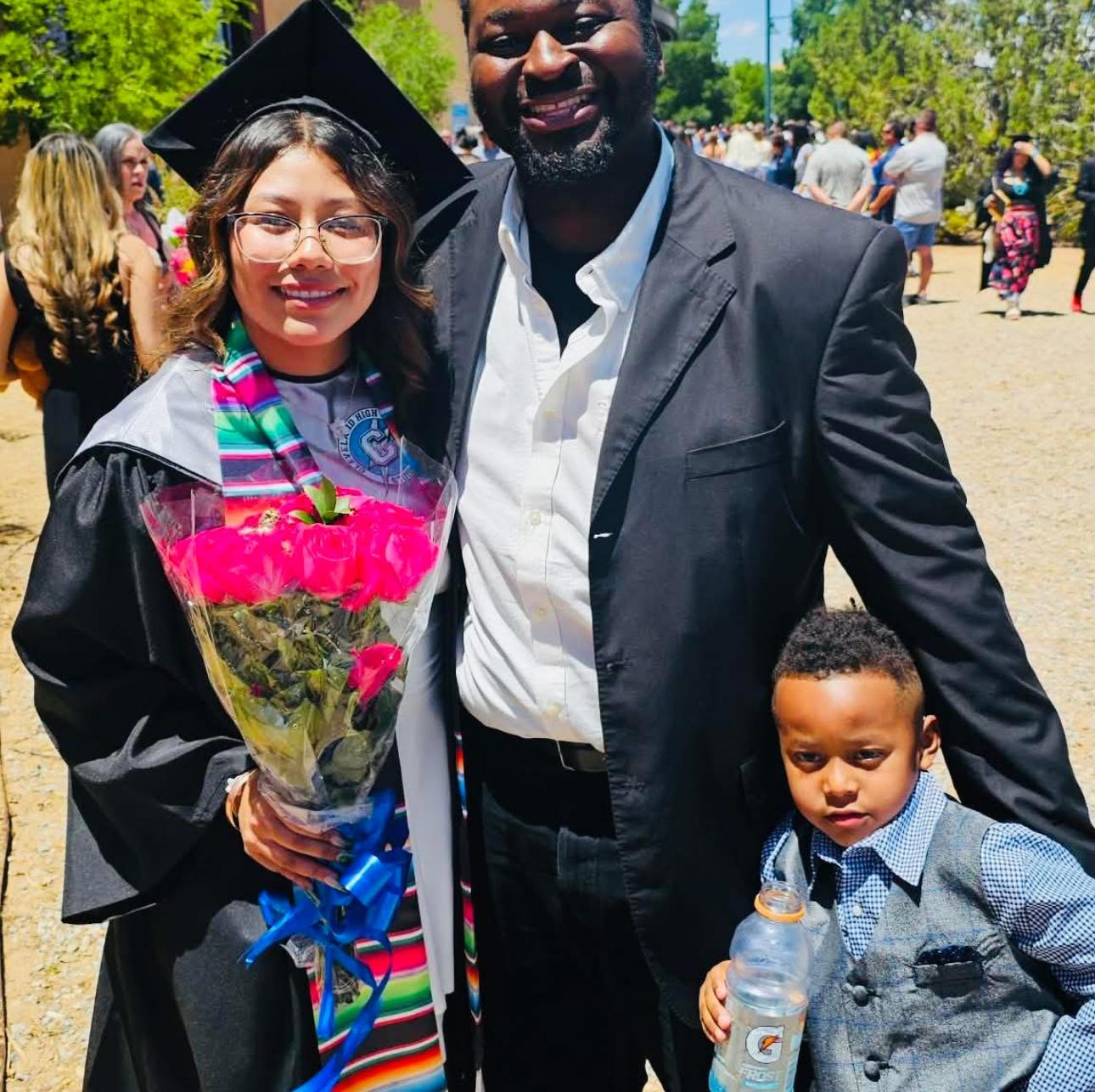
The cap is tossed. Photos are taken. Family and friends celebrate years of hard work and sacrifice. Social media fills with congratulations and excitement about the future.
But after the applause fades and the celebrations end, many graduates find themselves asking a difficult question: Now what?
For some, the answer seems clear, a new job, graduate school, or a professional career path.
For others, the future feels uncertain.
What Is Career Capital?
Career capital refers to the collection of skills, experiences, relationships, reputation, and knowledge that make you valuable in the marketplace.
Think of it as the professional equivalent of financial capital.
Just as money can be invested and grow over time, career capital can compound throughout your life.
Career capital includes:
- Technical skills
- Professional certifications
- Work experience
- Leadership experience
- Communication abilities
- Problem-solving skills
- Professional relationships
- Mentorship
- Personal reputation
- Emotional intelligence
The most successful professionals continue building their career capital long after graduation.
The diploma is the beginning not the end.
The World Has Changed
A generation ago, many people followed a straightforward path:
Graduate → Get a Job → Stay There for 30 Years → Retire
For most workers, that model no longer exists.
Today’s workforce requires adaptability.
According to the World Economic Forum, millions of jobs will be transformed by advances in automation, artificial intelligence, and digital technology over the next decade.
Some jobs will disappear.
Many new jobs will emerge.
Most careers will evolve.
The question is no longer:
“What degree do you have?”
The question is increasingly:
“Can you learn, adapt, and create value?”
Skills Are the New Currency
Degrees still matter.
But employers consistently rank skills among the most important factors when making hiring decisions.
Communication
Can you explain ideas clearly?
Can you write professional emails?
Can you present confidently?
Can you collaborate effectively with others?
Problem Solving
Can you identify challenges and develop solutions?
Can you think critically?
Can you analyze information and make informed decisions?
Adaptability
Can you adjust to change?
Can you learn new systems?
Can you remain effective during uncertainty?
Leadership
Leadership is not a title.
Leadership is influence.
Employers value people who take initiative, collaborate effectively, and help others succeed.
Emotional Intelligence
Increasingly, organizations recognize the importance of emotional intelligence.
This includes:
- Self-awareness
- Empathy
- Relationship management
- Conflict resolution
- Resilience
The future belongs not only to the smartest people but to those who can work effectively with other people.
Career Capital Resources
National Resources
LinkedIn Learning
https://www.linkedin.com/learning
Coursera
https://www.coursera.org
CareerOneStop
https://www.careeronestop.org
Apprenticeship.gov
https://www.apprenticeship.gov
DMV Resources
Maryland Workforce Exchange
https://mwejobs.maryland.gov
Virginia Career Works
https://virginiacareerworks.com
DC Department of Employment Services
https://does.dc.gov
Maryland Small Business Development Center
https://www.marylandsbdc.org
Year Up United
https://www.yearup.org

The reality is that a diploma, while valuable, is no longer a guaranteed ticket to success.
Today’s economy is evolving faster than ever. Industries are changing. Technology is transforming how we work. Artificial intelligence is reshaping entire professions.
Employers are looking for more than academic credentials.
In this new world, success depends not only on what you know, but also on what you can do, who you know, how you adapt, and how effectively you continue learning.
At The Gatsby Showcase Foundation, we call this career capital.
And while a diploma may open the door, career capital determines how far you walk through it.
Networking Without Feeling Fake
The word networking often makes people uncomfortable.
Many imagine awkward conversations, forced introductions, and transactional relationships.
But real networking is much simpler.
Networking is relationship building.
It’s about creating genuine connections with people who can share knowledge, opportunities, and support.
Start Small
You don’t need hundreds of contacts.
You need meaningful relationships.
Consider connecting with:
- Former professors
- Alumni
- Community leaders
- Internship supervisors
- Professional association members
- Mentors
Every successful professional can trace opportunities back to relationships.
A scholarship recommendation.
An internship referral.
A job introduction.
A business partnership.
Opportunity often travels through people.
Your Digital Reputation Is Your New Resume
Today’s employers don’t just review resumes.
They review digital footprints.
Before many interviews even occur, employers search candidates online.
Ask yourself:
- Does your LinkedIn profile reflect your goals?
- Does your online presence support your professional image?
- Are you showcasing your accomplishments?
Build Your Professional Brand
Consider creating:
- A strong LinkedIn profile
- A professional headshot
- A personal website or portfolio
- A digital collection of projects and accomplishments
Your online presence should tell a story about who you are and where you’re headed.
Entrepreneurship Is a Career Path Too
Not every graduate needs to pursue traditional employment.
Entrepreneurship is increasingly becoming a pathway to economic empowerment.
Many successful businesses begin as:
- Side hustles
- Freelance projects
- Consulting services
- Creative ventures
- Online businesses
Entrepreneurship allows individuals to:
- Create their own opportunities
- Build wealth
- Solve community problems
- Generate employment for others
At Gatsby, we believe entrepreneurship is one of the most powerful tools for creating economic mobility and generational impact.
Lifelong Learning Is the New Job Security
Perhaps the greatest misconception in modern education is the belief that learning ends after graduation.
The most successful people never stop learning.
In today’s world, your ability to learn may be your most valuable asset.
Consider Pursuing:
- Professional certifications
- Industry credentials
- Online courses
- Leadership training
- Technical workshops
- Entrepreneurship programs
The goal is not simply to keep up.
The goal is to stay ahead.
Building Career Capital and Financial Capital Together
Career success and financial success are deeply connected.
As your career capital grows, your earning potential often grows as well.
But increased income alone does not create wealth.
Saving Early
Even small amounts matter.
Time is one of the greatest wealth-building tools available.
Understanding Credit
Your credit score affects:
- Housing opportunities
- Transportation financing
- Business funding
- Future investments
Investing Consistently
You don’t need to be wealthy to invest.
You simply need to start.
Living Below Your Means
Many people increase spending every time income increases.
Wealth builders increase investments.
Real Story: Building More Than a Resume
“When I graduated, I thought my degree would be enough. It wasn’t. I applied to dozens of jobs and heard nothing back.
A mentor encouraged me to join a professional association, improve my LinkedIn profile, and start attending networking events.
Within six months, I landed an internship that led to a full-time position.
Looking back, the degree got me in the conversation. The relationships got me the opportunity.”
— Jasmine R., First-Generation College Graduate
Final Word: Your Diploma Is a Key, Not a Destination
Graduation is a remarkable achievement.
Celebrate it.
Honor it.
Be proud of it.
But understand that a diploma is not the finish line.
It is an invitation.
An invitation to continue learning.
To continue growing.
To continue building.
The future belongs to those who invest not only in their education—but also in their skills, relationships, character, adaptability, and purpose.
At The Gatsby Showcase Foundation, we believe every student, entrepreneur, and emerging leader has the capacity to build extraordinary career capital and use it to create meaningful impact.
Because:
Degrees create opportunity.
Skills create value.
Relationships create access.
Character creates trust.
Purpose creates legacy.
And that legacy begins the day after graduation.
Dr. Bertrand Fote, MD, MBA, FACEP, CF²
President
The Gatsby Showcase Foundation
The reality is that a diploma, while valuable, is no longer a guaranteed ticket to success.
Today’s economy is evolving faster than ever. Industries are changing. Technology is transforming how we work. Artificial intelligence is reshaping entire professions.
Employers are looking for more than academic credentials.
In this new world, success depends not only on what you know, but also on what you can do, who you know, how you adapt, and how effectively you continue learning.
At The Gatsby Showcase Foundation, we call this career capital.
And while a diploma may open the door, career capital determines how far you walk through it.
What Is Career Capital?
Career capital refers to the collection of skills, experiences, relationships, reputation, and knowledge that make you valuable in the marketplace.
Think of it as the professional equivalent of financial capital.
Just as money can be invested and grow over time, career capital can compound throughout your life.
Career capital includes:
- Technical skills
- Professional certifications
- Work experience
- Leadership experience
- Communication abilities
- Problem-solving skills
- Professional relationships
- Mentorship
- Personal reputation
- Emotional intelligence
The most successful professionals continue building their career capital long after graduation.
The diploma is the beginning not the end.
The World Has Changed
A generation ago, many people followed a straightforward path:
Graduate → Get a Job → Stay There for 30 Years → Retire
For most workers, that model no longer exists.
Today’s workforce requires adaptability.
According to the World Economic Forum, millions of jobs will be transformed by advances in automation, artificial intelligence, and digital technology over the next decade.
Some jobs will disappear.
Many new jobs will emerge.
Most careers will evolve.
The question is no longer:
“What degree do you have?”
The question is increasingly:
“Can you learn, adapt, and create value?”
Skills Are the New Currency
Degrees still matter.
But employers consistently rank skills among the most important factors when making hiring decisions.
Communication
Can you explain ideas clearly?
Can you write professional emails?
Can you present confidently?
Can you collaborate effectively with others?
Problem Solving
Can you identify challenges and develop solutions?
Can you think critically?
Can you analyze information and make informed decisions?
Adaptability
Can you adjust to change?
Can you learn new systems?
Can you remain effective during uncertainty?
Leadership
Leadership is not a title.
Leadership is influence.
Employers value people who take initiative, collaborate effectively, and help others succeed.
Emotional Intelligence
Increasingly, organizations recognize the importance of emotional intelligence.
This includes:
- Self-awareness
- Empathy
- Relationship management
- Conflict resolution
- Resilience
The future belongs not only to the smartest people—but to those who can work effectively with other people.
Networking Without Feeling Fake
The word networking often makes people uncomfortable.
Many imagine awkward conversations, forced introductions, and transactional relationships.
But real networking is much simpler.
Networking is relationship building.
It’s about creating genuine connections with people who can share knowledge, opportunities, and support.
Start Small
You don’t need hundreds of contacts.
You need meaningful relationships.
Consider connecting with:
- Former professors
- Alumni
- Community leaders
- Internship supervisors
- Professional association members
- Mentors
Every successful professional can trace opportunities back to relationships.
A scholarship recommendation.
An internship referral.
A job introduction.
A business partnership.
Opportunity often travels through people.
Your Digital Reputation Is Your New Resume
Today’s employers don’t just review resumes.
They review digital footprints.
Before many interviews even occur, employers search candidates online.
Ask yourself:
- Does your LinkedIn profile reflect your goals?
- Does your online presence support your professional image?
- Are you showcasing your accomplishments?
Build Your Professional Brand
Consider creating:
- A strong LinkedIn profile
- A professional headshot
- A personal website or portfolio
- A digital collection of projects and accomplishments
Your online presence should tell a story about who you are and where you’re headed.
Entrepreneurship Is a Career Path Too
Not every graduate needs to pursue traditional employment.
Entrepreneurship is increasingly becoming a pathway to economic empowerment.
Many successful businesses begin as:
- Side hustles
- Freelance projects
- Consulting services
- Creative ventures
- Online businesses
Entrepreneurship allows individuals to:
- Create their own opportunities
- Build wealth
- Solve community problems
- Generate employment for others
At Gatsby, we believe entrepreneurship is one of the most powerful tools for creating economic mobility and generational impact.
Lifelong Learning Is the New Job Security
Perhaps the greatest misconception in modern education is the belief that learning ends after graduation.
The most successful people never stop learning.
In today’s world, your ability to learn may be your most valuable asset.
Consider Pursuing:
- Professional certifications
- Industry credentials
- Online courses
- Leadership training
- Technical workshops
- Entrepreneurship programs
The goal is not simply to keep up.
The goal is to stay ahead.
Building Career Capital and Financial Capital Together
Career success and financial success are deeply connected.
As your career capital grows, your earning potential often grows as well.
But increased income alone does not create wealth.
Saving Early
Even small amounts matter.
Time is one of the greatest wealth-building tools available.
Understanding Credit
Your credit score affects:
- Housing opportunities
- Transportation financing
- Business funding
- Future investments
Investing Consistently
You don’t need to be wealthy to invest.
You simply need to start.
Living Below Your Means
Many people increase spending every time income increases.
Wealth builders increase investments.
Career Capital Resources
National Resources
LinkedIn Learning
https://www.linkedin.com/learning
Coursera
https://www.coursera.org
CareerOneStop
https://www.careeronestop.org
Apprenticeship.gov
https://www.apprenticeship.gov
DMV Resources
Maryland Workforce Exchange
https://mwejobs.maryland.gov
Virginia Career Works
https://virginiacareerworks.com
DC Department of Employment Services
https://does.dc.gov
Maryland Small Business Development Center
https://www.marylandsbdc.org
Year Up United
https://www.yearup.org
Real Story: Building More Than a Resume
“When I graduated, I thought my degree would be enough. It wasn’t. I applied to dozens of jobs and heard nothing back.
A mentor encouraged me to join a professional association, improve my LinkedIn profile, and start attending networking events.
Within six months, I landed an internship that led to a full-time position.
Looking back, the degree got me in the conversation. The relationships got me the opportunity.”
— Jasmine R., First-Generation College Graduate
Final Word: Your Diploma Is a Key, Not a Destination
Graduation is a remarkable achievement.
Celebrate it.
Honor it.
Be proud of it.
But understand that a diploma is not the finish line.
It is an invitation.
An invitation to continue learning.
To continue growing.
To continue building.
The future belongs to those who invest not only in their education—but also in their skills, relationships, character, adaptability, and purpose.
At The Gatsby Showcase Foundation, we believe every student, entrepreneur, and emerging leader has the capacity to build extraordinary career capital and use it to create meaningful impact.
Because:
Degrees create opportunity.
Skills create value.
Relationships create access.
Character creates trust.
Purpose creates legacy.
And that legacy begins the day after graduation.
Dr. Bertrand Fote, MD, MBA, FACEP, CF²
President
The Gatsby Showcase Foundation